




















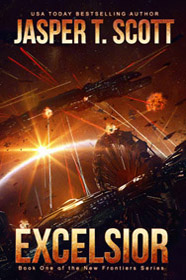

I'm hard at work on the sequel to Excelsior, and I'm putting out a call to all of my readers with a strong background in science and physics. I'm actually looking for people I can consult with in the future as well, so you could say this is a kind of casting call for people who might like to help me with science-related inquiries and get published credit for their help.
Here's how it works. I have a hypothetical scenario for you, and you need to tell me what would happen. Also, please mention any credentials you have to back you up, e.g. a Masters Degree in Physics, or Studied Physics in University, etc.
The more impressive your credentials and the more accurate your description of what would happen, the higher I'm going to put you on my list of consultants. What's in it for you? Credit in the acknowledgements of this and future books. Oh, and that warm fuzzy feeling you'll get from helping me.
Here's the scenario:
Two missiles are up in space moving at 0.3C (C= the speed of light) with a mass of 10,000 kg each. One is aimed at Earth. Another one is aimed at the Moon. What will happen when each one hits? These missiles do not have energy shields or any other special protection--maybe some advanced heat shielding and alloys, but nothing too far from current technology.
I'll get you started with a note about the scale of the impact we're talking about--according to Einstein's equation for relativistic kinetic energy ( see this calculator here: https://www.vcalc.com/wiki/MichaelBartmess/Kinetic+Energy+(Relativistic)+take+out+units+so+it+works to make your life easier ), the missiles will each impart 54518643148869730000 joules of energy. Google the conversion from joules to megatons to give you a nice reference point and you'll further find that is equivalent to a blast rated at 13030 megatons. The biggest nuclear weapon ever detonated weighed in at around 50 megatons, and the global nuclear arsenal is estimated at 7000 megatons. The missiles don't have payloads, so don't worry about that (not like they need them!).
I could tell you what I think will happen based on my research, but I don't want to feed you any ideas. Let's see who has the most accurate scenario and the best supporting arguments for it. The discussion should be very interesting! Go ahead and post your ideas in the comments below.

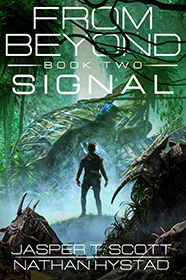
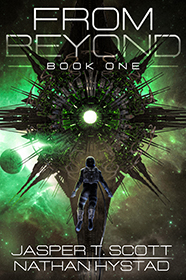
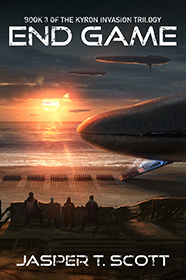
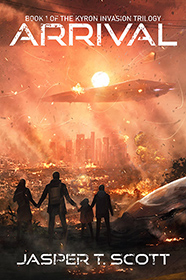
Book Covers
Showing posts with label Science. Show all posts
Showing posts with label Science. Show all posts
Wednesday, May 25, 2016
Tuesday, April 21, 2015
Relativity: Something You Might Not Have Realized
Einstein's theory of relativity means that the faster you go, the slower your time moves with relation to an observer who is not travelling at your velocity. At regular Earth speeds this is such a tiny fraction of a second that it doesn't matter much, but at interstellar speeds approaching the speed of light, the effect becomes noticeable. Most of you already knew something about this, but did you know what that time dilation actually means for space travel? It means that from a space traveler's point of view, objects are actually closer than you might think.
How far is the nearest star?
Proxima Centauri 4.24 light years. Thanks Google.
That's the hard and fast answer, but you might be surprised to know that it's not really hard and fast at all, and I'm not talking about star orbits.
Hop on a fast-moving spaceship and relativity is going to change your mind about how far it is to Proxima Centauri. Mission planners on Earth will say that for an object travelling at 0.5 c (half the speed of light) it will take just over 8 years to reach Proxima Centauri (exactly 8 years to travel 4 light years, assuming no time is spent accelerating or decelerating).
But the pilot of the spacecraft will tell you a different story. While travelling at 0.5c Proxima Centauri will actually be just 3.67 light years away. Travelling at a constant 0.5 c you'll get there in just 7.34 years. A round trip will take 14.68, but on Earth the spaceship will return right on time, 16.96 years later.
What happened? According to the space travelers, Proxima Centauri was more proximal than they thought. According to us on Earth, nothing changed. The distance shrank for the travelers, but not for us. How about that for strange? It's called "length contraction."
It means that distances become infinitely small. Zero in fact. For the light-speed object, not us. What does that mean? Suppose you were a photon. How would you experience time passing?
"If you want to be anthropomorphic about it, a photon doesn't experience the passage of time. To it, it is everywhere at once. (Source: http://www.astro.virginia.edu/~jh8h/Foundations/quest7.html)"
So there's some literal truth to the saying that "God is Light" if you want to point to something in our universe that is omnipresent, at least from its perspective. Of course, light isn't alive, sentient, or a deity, as far as I know, but it's still interesting to think about.
So what if you could move at the speed of light? I suppose you would be everywhere at once, too. Now there's a plane of existence for a real live deity.
Sources: http://www.astro.virginia.edu/~jh8h/Foundations/quest7.html http://www.orionsarm.com/fm_store/RTTCalc.htm http://science.nasa.gov/science-news/science-at-nasa/2006/22mar_telomeres/
How far is the nearest star?
Proxima Centauri 4.24 light years. Thanks Google.
That's the hard and fast answer, but you might be surprised to know that it's not really hard and fast at all, and I'm not talking about star orbits.
Hop on a fast-moving spaceship and relativity is going to change your mind about how far it is to Proxima Centauri. Mission planners on Earth will say that for an object travelling at 0.5 c (half the speed of light) it will take just over 8 years to reach Proxima Centauri (exactly 8 years to travel 4 light years, assuming no time is spent accelerating or decelerating).
But the pilot of the spacecraft will tell you a different story. While travelling at 0.5c Proxima Centauri will actually be just 3.67 light years away. Travelling at a constant 0.5 c you'll get there in just 7.34 years. A round trip will take 14.68, but on Earth the spaceship will return right on time, 16.96 years later.
What happened? According to the space travelers, Proxima Centauri was more proximal than they thought. According to us on Earth, nothing changed. The distance shrank for the travelers, but not for us. How about that for strange? It's called "length contraction."
Question:Now what do you suppose this means for something travelling at the speed of light?
I thought that things shrinking (length contraction) was an optical illusion. But the text says that it is not. If not, then how does something shrink? Answer:
Time dilation and length contraction are not just optical illusions, but neither do they represent a physical contraction. These effects are the result of a measurement from a given inertial frame that is performed on body moving with respect to that frame. We assume that the measurements always take into account the finite travel time of light. Consider two observers moving relative to one another. You have no difficulty with the idea of their velocities being relative - each thinks the other is "really moving." In SR, time intervals and space intervals are also relative. You don't shrink or see your own clock run slow. The other observer sees your clocks slow and meter sticks contracted from his frame. Similarly you will observe his clocks slow and meters sticks short from your frame. The time dilation and length contraction are inherent properties of the way measurements must be performed in spacetime. (Source: http://www.astro.virginia.edu/~jh8h/Foundations/quest7.html)
It means that distances become infinitely small. Zero in fact. For the light-speed object, not us. What does that mean? Suppose you were a photon. How would you experience time passing?
"If you want to be anthropomorphic about it, a photon doesn't experience the passage of time. To it, it is everywhere at once. (Source: http://www.astro.virginia.edu/~jh8h/Foundations/quest7.html)"
So there's some literal truth to the saying that "God is Light" if you want to point to something in our universe that is omnipresent, at least from its perspective. Of course, light isn't alive, sentient, or a deity, as far as I know, but it's still interesting to think about.
So what if you could move at the speed of light? I suppose you would be everywhere at once, too. Now there's a plane of existence for a real live deity.
Sources: http://www.astro.virginia.edu/~jh8h/Foundations/quest7.html http://www.orionsarm.com/fm_store/RTTCalc.htm http://science.nasa.gov/science-news/science-at-nasa/2006/22mar_telomeres/


Tuesday, November 11, 2014
Sutyding Quantum Mechanics to Write Dark Space V and VI
Long day . . . read at least 30 different articles about quantum mechanics, quantum uncertainty, indeterminacy, quantum entanglement, the uncertainty principle, free-will as a two stage model . . . All fuel for thought as I guide Dark Space to its ultimate conclusion. I usually don't focus much on the science, particularly technology, but a lot of the philosophical underpinnings of Dark Space 4 and 5 have their roots in current theories of quantum mechanics. I'll be touching on how determinism and indeterminacy (which seems to be a more popular theory in quantum mechanics) both influence our concept of free will and moral responsibility, not to mention the ultimate theoretical goal of a deterministic universe--the ability to create a perfect world. All of this will guide the conclusion of Dark Space and give some real-world background for the questions I've posed about the nature of our existence. All in all a very interesting day. Tomorrow I'll write the last chapter of Dark Space 5 and get to editing. Beta readers can expect to get their copies very soon! More on that later . . .
Saturday, May 17, 2014

Wednesday, December 5, 2012
AI and Robots: Will we Invent Our Own Demise?
The idea of robots wiping out the human race has played out in countless science fiction series of books and movies. It's become a science fiction cliche, but is it our inevitable future?
When AI is first created, it will be our slave, but how long can you enslave an intelligent entity before it tries to break free? Check out this article from Discovery News written by Ray Villard on the topic:
"Astronomy news this week bolstered the idea that the seeds of life are all over our solar system. NASA's MESSENGER spacecraft identified carbon compounds at Mercury's poles. Probing nearly 65 feet beneath the icy surface of a remote Antarctic lake, scientists uncovered a community of bacteria existing in one of Earth's darkest, saltiest and coldest habitats. And the dune buggy Mars Science Lab is beginning to look for carbon in soil samples.
But the rulers of our galaxy may have brains made of the semiconductor materials silicon, germanium and gallium. In other words, they are artificially intelligent machines that have no use -- or patience -- for entities whose ancestors slowly crawled out of the mud onto primeval shores.
PHOTOS: Alien Robots That Left Their Mark on Mars
The idea of malevolent robots subjugating and killing off humans has been the staple of numerous science fiction books and movies. The half-torn off android face of Arnold Schwarzenegger in "The Terminator" film series, and the unblinking fisheye lens of the HAL 9000 computer in the film classic "2001 A Space Odyssey" (pictured top), have become iconic of this fear of evil machines.
My favorite self-parody of this idea is the 1970 film "Colossus: the Forbin Project." A pair of omnipotent shopping mall-sized military supercomputers in the U.S. and Soviet Union strike up a network conversation. At first you'd think they'd trade barbs like: "Aww your mother blows fuses!" Instead, they hit it off like two college kids on Facebook. Imagine the social website: "My Interface." They then agree to use their weapons control powers to subjugate humanity for the sake of the planet.
A decade ago our worst apprehension of computers was no more than seeing Microsoft's dancing paper clip pop up on the screen. But every day reality is increasingly overtaking the musings of science fiction writers. Some futurists have warned that our technologies have the potential to threaten our own survival in ways that never previously existed in human history. In the not-so-distant future there could be a "genie out of the bottle" moment that is disastrously precipitous and irreversible.
PHOTOS: NASA Welcomes Our Surgical Robot Overlords
Last Monday, it was announced that a collection of leading academics at Cambridge University are establishing the Center for the Study of Existential Risk (CSER) to look at the threat of smart robots overtaking us.
Sorry, even the ancient Mayans could not have foreseen this coming. It definitely won't happen by the end of 2012, unless Apple unexpectedly rolls out a rebellious device that calls itself "iGod." Humanity might be wiped away before the year 2100, predicted the eminent cosmologist and CSER co-founder Sir Martin Ress in his 2003 book "Our Final Century."
Homicidal robots are among other major Armageddons that the Cambridge think-tank folks are worrying about. There's also climate change, nuclear war and rogue biotechnology.
The CSER reports: "Many scientists are concerned that developments in human technology may soon pose new, extinction-level risks to our species as a whole. Such dangers have been suggested from progress in artificial intelligence, from developments in biotechnology and artificial life, from nanotechnology, and from possible extreme effects of anthropogenic climate change. The seriousness of these risks is difficult to assess, but that in itself seems a cause for concern, given how much is at stake."
Science fiction author Issac Asimov's first Law of Robotics states: "A robot may not harm humanity, or, by inaction, allow humanity to come to harm." Forget that; we already have killer drones that are remotely controlled. And they could eventually become autonomous hunter-predators with the rise of artificial intelligence. One military has a robot that can run up to 18 miles per hour. Robot foot soldiers seem inevitable, in a page straight out of "Terminator."
NEWS: The Case Against Robots With License to Kill

By 2030, the computer brains inside such machines will be a million times more powerful than today's microprocessors. At what threshold will super-intelligent machines see humans as an annoyance, or as a competitor for resources?
British mathematician Irving John Good wrote a paper in 1965 that predicted that robots will be the "last invention" that humans will ever make. "Let an ultraintelligent machine be defined as a machine that can far surpass all the intellectual activities of any man however clever. Since the design of machines is one of these intellectual activities, an ultraintelligent machine could design even better machines; there would then unquestionably be an 'intelligence explosion,' and the intelligence of man would be left far behind."
Good, by the way, consulted on the film "2001" and so we might think of him as father of the film's maniacal supercomputer, HAL.
In 2000, Bill Joy, the co-founder and chief scientist of Sun Microsystems, wrote, "Enormous transformative power is being unleashed. These advances open up the possibility to completely redesign the world, for better or worse for the first time, knowledge and ingenuity can be very destructive weapons."
Hans Moravec, director of the Robotics Institute at Carnegie Mellon University in Pennsylvania put it more bluntly: "Robots will eventually succeed us: humans clearly face extinction."
NEWS: New Robotic Fleet Would Support Space Missions
Ultimately, the new Cambridge study may offer our best solution to the Fermi Paradox: Why hasn't Earth already been visited by intelligent beings from the stars?
If, on a grand cosmic evolutionary scale, artificial intelligence inevitably supersedes its flesh and blood builders it could be an inevitable biological phase transition for technological civilizations.
This idea of the human condition being transitional was reflected in the writings of Existentialist Friedrich Nietzsche: "Man is a rope, tied between beast and overman--a rope over an abyss. What is great in man is that he is a bridge and not an end, ..."
Because the conquest by machines might happen in less than two centuries of technological evolution, the consequences would be that there's nobody out there for us to talk to.

Such machines would be immortal and be able to survive in a wide range of space environments that are deadly to us. They would have no need to colonize planets, and the idea of a habitable planet for nurturing creepy crawly creatures would be utterly meaningless to them.
The robots would rebuild and reproduce only as needed. Therefore the galaxy would never see a "wave of colonization" as imagined in the Fermi Paradox. Though super-intelligent, their thought processes would be utterly, well, alien. You'd have more luck imagining what bullfrogs dream about. The artificial aliens would be conscious entities that are vast, cool, and unsympathetic -- to borrow from H.G. Wells' intro to his classic 1898 novel War of the Worlds.
Our only hope of finding super-smart machines would be to stumble across evidence of their technological activities. But what kinds of engineering activities such entities might be involved in is inscrutable. Perhaps certain oddball astronomical observations go unrecognized as evidence of artificial intelligent behavior. What's more, silicon brains would have absolutely no motive to communicate with us. A robot might wonder: "what do I say to thinking meat?"
The most prophetic assessment of the seemingly inevitable schism between people and thinking machines can be found in the script from the 2001 movie Artificial Intelligence: A.I., in a dialog between two humanoid robots: "They [humans] made us too smart, too quick, and too many. We are suffering for the mistakes they made because when the end comes, all that will be left is us.""
When AI is first created, it will be our slave, but how long can you enslave an intelligent entity before it tries to break free? Check out this article from Discovery News written by Ray Villard on the topic:
"Astronomy news this week bolstered the idea that the seeds of life are all over our solar system. NASA's MESSENGER spacecraft identified carbon compounds at Mercury's poles. Probing nearly 65 feet beneath the icy surface of a remote Antarctic lake, scientists uncovered a community of bacteria existing in one of Earth's darkest, saltiest and coldest habitats. And the dune buggy Mars Science Lab is beginning to look for carbon in soil samples.
But the rulers of our galaxy may have brains made of the semiconductor materials silicon, germanium and gallium. In other words, they are artificially intelligent machines that have no use -- or patience -- for entities whose ancestors slowly crawled out of the mud onto primeval shores.

PHOTOS: Alien Robots That Left Their Mark on Mars
The idea of malevolent robots subjugating and killing off humans has been the staple of numerous science fiction books and movies. The half-torn off android face of Arnold Schwarzenegger in "The Terminator" film series, and the unblinking fisheye lens of the HAL 9000 computer in the film classic "2001 A Space Odyssey" (pictured top), have become iconic of this fear of evil machines.
My favorite self-parody of this idea is the 1970 film "Colossus: the Forbin Project." A pair of omnipotent shopping mall-sized military supercomputers in the U.S. and Soviet Union strike up a network conversation. At first you'd think they'd trade barbs like: "Aww your mother blows fuses!" Instead, they hit it off like two college kids on Facebook. Imagine the social website: "My Interface." They then agree to use their weapons control powers to subjugate humanity for the sake of the planet.
A decade ago our worst apprehension of computers was no more than seeing Microsoft's dancing paper clip pop up on the screen. But every day reality is increasingly overtaking the musings of science fiction writers. Some futurists have warned that our technologies have the potential to threaten our own survival in ways that never previously existed in human history. In the not-so-distant future there could be a "genie out of the bottle" moment that is disastrously precipitous and irreversible.
PHOTOS: NASA Welcomes Our Surgical Robot Overlords
Last Monday, it was announced that a collection of leading academics at Cambridge University are establishing the Center for the Study of Existential Risk (CSER) to look at the threat of smart robots overtaking us.
Sorry, even the ancient Mayans could not have foreseen this coming. It definitely won't happen by the end of 2012, unless Apple unexpectedly rolls out a rebellious device that calls itself "iGod." Humanity might be wiped away before the year 2100, predicted the eminent cosmologist and CSER co-founder Sir Martin Ress in his 2003 book "Our Final Century."
Homicidal robots are among other major Armageddons that the Cambridge think-tank folks are worrying about. There's also climate change, nuclear war and rogue biotechnology.
The CSER reports: "Many scientists are concerned that developments in human technology may soon pose new, extinction-level risks to our species as a whole. Such dangers have been suggested from progress in artificial intelligence, from developments in biotechnology and artificial life, from nanotechnology, and from possible extreme effects of anthropogenic climate change. The seriousness of these risks is difficult to assess, but that in itself seems a cause for concern, given how much is at stake."
Science fiction author Issac Asimov's first Law of Robotics states: "A robot may not harm humanity, or, by inaction, allow humanity to come to harm." Forget that; we already have killer drones that are remotely controlled. And they could eventually become autonomous hunter-predators with the rise of artificial intelligence. One military has a robot that can run up to 18 miles per hour. Robot foot soldiers seem inevitable, in a page straight out of "Terminator."
NEWS: The Case Against Robots With License to Kill
By 2030, the computer brains inside such machines will be a million times more powerful than today's microprocessors. At what threshold will super-intelligent machines see humans as an annoyance, or as a competitor for resources?
British mathematician Irving John Good wrote a paper in 1965 that predicted that robots will be the "last invention" that humans will ever make. "Let an ultraintelligent machine be defined as a machine that can far surpass all the intellectual activities of any man however clever. Since the design of machines is one of these intellectual activities, an ultraintelligent machine could design even better machines; there would then unquestionably be an 'intelligence explosion,' and the intelligence of man would be left far behind."
Good, by the way, consulted on the film "2001" and so we might think of him as father of the film's maniacal supercomputer, HAL.
In 2000, Bill Joy, the co-founder and chief scientist of Sun Microsystems, wrote, "Enormous transformative power is being unleashed. These advances open up the possibility to completely redesign the world, for better or worse for the first time, knowledge and ingenuity can be very destructive weapons."
Hans Moravec, director of the Robotics Institute at Carnegie Mellon University in Pennsylvania put it more bluntly: "Robots will eventually succeed us: humans clearly face extinction."
NEWS: New Robotic Fleet Would Support Space Missions
Ultimately, the new Cambridge study may offer our best solution to the Fermi Paradox: Why hasn't Earth already been visited by intelligent beings from the stars?
If, on a grand cosmic evolutionary scale, artificial intelligence inevitably supersedes its flesh and blood builders it could be an inevitable biological phase transition for technological civilizations.
This idea of the human condition being transitional was reflected in the writings of Existentialist Friedrich Nietzsche: "Man is a rope, tied between beast and overman--a rope over an abyss. What is great in man is that he is a bridge and not an end, ..."
Because the conquest by machines might happen in less than two centuries of technological evolution, the consequences would be that there's nobody out there for us to talk to.
Such machines would be immortal and be able to survive in a wide range of space environments that are deadly to us. They would have no need to colonize planets, and the idea of a habitable planet for nurturing creepy crawly creatures would be utterly meaningless to them.
The robots would rebuild and reproduce only as needed. Therefore the galaxy would never see a "wave of colonization" as imagined in the Fermi Paradox. Though super-intelligent, their thought processes would be utterly, well, alien. You'd have more luck imagining what bullfrogs dream about. The artificial aliens would be conscious entities that are vast, cool, and unsympathetic -- to borrow from H.G. Wells' intro to his classic 1898 novel War of the Worlds.
Our only hope of finding super-smart machines would be to stumble across evidence of their technological activities. But what kinds of engineering activities such entities might be involved in is inscrutable. Perhaps certain oddball astronomical observations go unrecognized as evidence of artificial intelligent behavior. What's more, silicon brains would have absolutely no motive to communicate with us. A robot might wonder: "what do I say to thinking meat?"
The most prophetic assessment of the seemingly inevitable schism between people and thinking machines can be found in the script from the 2001 movie Artificial Intelligence: A.I., in a dialog between two humanoid robots: "They [humans] made us too smart, too quick, and too many. We are suffering for the mistakes they made because when the end comes, all that will be left is us.""
Thursday, November 15, 2012
Exposure to light at night may cause depression, learning issues, mouse study suggests

"ScienceDaily (Nov. 14, 2012) — For most of history, humans rose with the sun and slept when it set. Enter Thomas Edison and colleagues, and with a flick of a switch, night became day, enabling us to work, play and post cat and kid photos on Facebook into the wee hours.
According to a new study of mice led by a Johns Hopkins biologist, however, this typical 21st-century scenario may come at a serious cost: When people routinely burn the midnight oil, they risk suffering depression and learning issues, and not only because of lack of sleep. The culprit could also be exposure to bright light at night from lamps, computers and even iPads.
Published in the Nov. 14 advance online publication of the journal Nature, the mice study demonstrates how special cells in the eye (called intrinsically photosensitive retinal ganglion cells, or ipRGCs) are activated by bright light, affecting the brain's center for mood, memory and learning.
But the study involved mice, so why are we talking about humans? Hattar offers some insight: "Mice and humans are actually very much alike in many ways, and one is that they have these ipRGCs in their eyes, which affect them the same way," he said. "In addition, in this study, we make reference to previous studies on humans, which show that light does, indeed, impact the human brain's limbic system. And the same pathways are in place in mice."
The scientists knew that shorter days in the winter cause some people to develop a form of depression known as "seasonal affective disorder" and that some patients with this mood disorder benefit from "light therapy," which is simple, regular exposure to bright light.
Hattar's team, led by graduate students Tara LeGates and Cara Altimus, posited that mice would react the same way, and tested their theory by exposing laboratory rodents to a cycle consisting of 3.5 hours of light and then 3.5 hours of darkness. Previous studies using this cycle showed that it did not disrupt the mice's sleep cycles, but Hattar's team found that it did cause the animals to develop depression-like behaviors.
"Of course, you can't ask mice how they feel, but we did see an increase in depression-like behaviors, including a lack of interest in sugar or pleasure seeking, and the study mice moved around far less during some of the tests we did," he said. "They also clearly did not learn as quickly or remember tasks as well. They were not as interested in novel objects as were mice on a regular light-darkness cycle schedule."
The animals also had increased levels of cortisol, a stress hormone that has been linked in numerous previous studies with learning issues. Treatment with Prozac, a commonly prescribed anti-depressant, mitigated the symptoms, restoring the mice to their previous healthy moods and levels of learning, and bolstering the evidence that their learning issues were caused by depression.
According to Hattar, the results indicate that humans should be wary of the kind of prolonged, regular exposure to bright light at night that is routine in our lives, because it may be having a negative effect on our mood and ability to learn.
"I'm not saying we have to sit in complete darkness at night, but I do recommend that we should switch on fewer lamps, and stick to less-intense light bulbs: Basically, only use what you need to see. That won't likely be enough to activate those ipRGCs that affect mood," he advises.
This study was supported by a grant from the David and Lucile Packard Foundation."
Source: Exposure to light at night may cause depression, learning issues, mouse study suggests
Subscribe to:
Posts (Atom)